From Groningen to Rotterdam: Field Notes from World Hydrogen Summit 2026
Ekansh Sharma · Founder, HyGOAT
World Hydrogen Summit · Netherlands · Hydrogen Valley · RFNBO · Port of Rotterdam · Offtake · Green Hydrogen · India
Three places, one demand question
A 18–22 May 2026 timeline from Groningen to an RFNBO roundtable and Rotterdam, ending with the demand question.
Groningen
A Hydrogen Valley visit put production, storage, transport, and demand in one system.
RFNBO roundtable
The summit discussion focused on bankable certainty before an investment decision.
Rotterdam
The port visit showed an industrial corridor for ammonia and hydrogen movement.
Demand
Each stop returned to the question of who commits to buy the molecule.
The field notes connect Groningen, an RFNBO roundtable, and Rotterdam around demand.
ScopeField-note summary of the cited summit discussions.
I went to the World Hydrogen Summit 2026 expecting to learn about technology and policy. I came back thinking about demand.
Over a week in the Netherlands I sat in the world's first Hydrogen Valley, watched a stove run on hydrogen, argued bidding zones in a roundtable full of developers and certifiers, and walked a port that is quietly being rebuilt around ammonia. Three very different places. They kept handing me the same lesson, in three different accents.
This is not a policy paper. It is a set of field notes, in the order they happened.
Monday, 18 May - Groningen, where the value chain has a birthplace
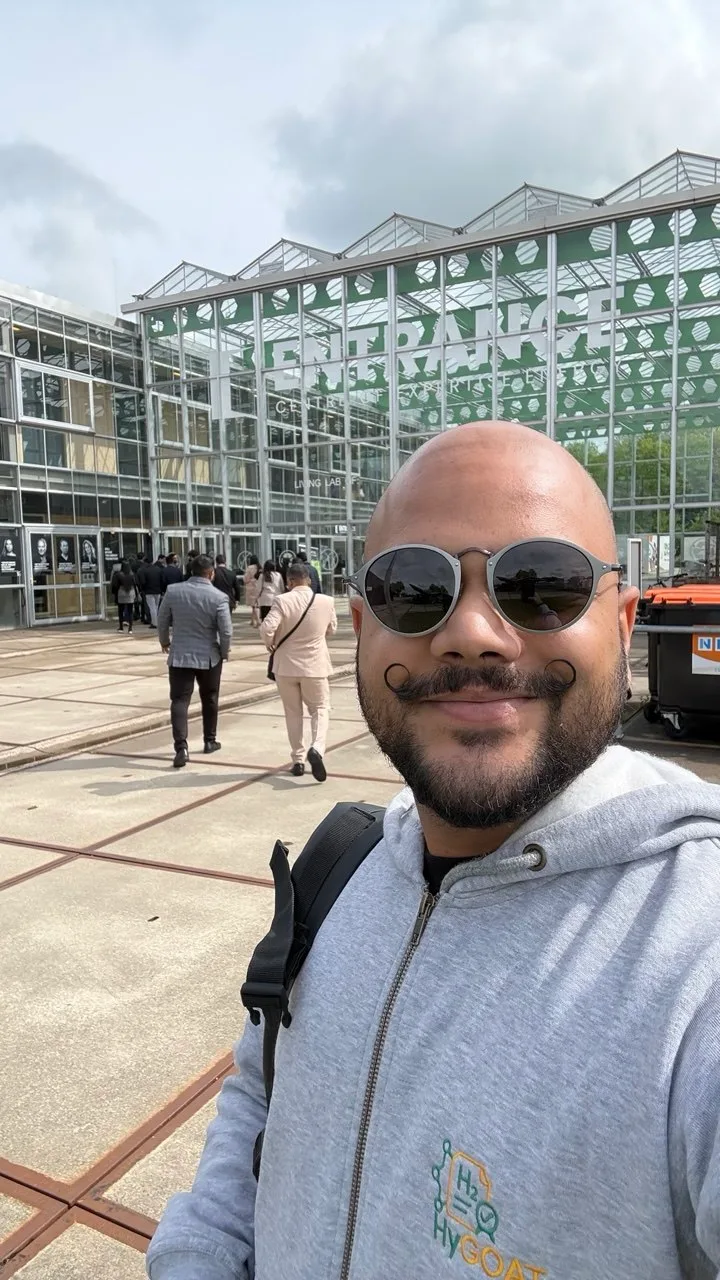
We started on a fresh Monday morning, on a bus out of Rotterdam, driving north to Groningen. Our destination was the University of Groningen and its research center, where the world's first Hydrogen Valley was conceived.
 View full-size image
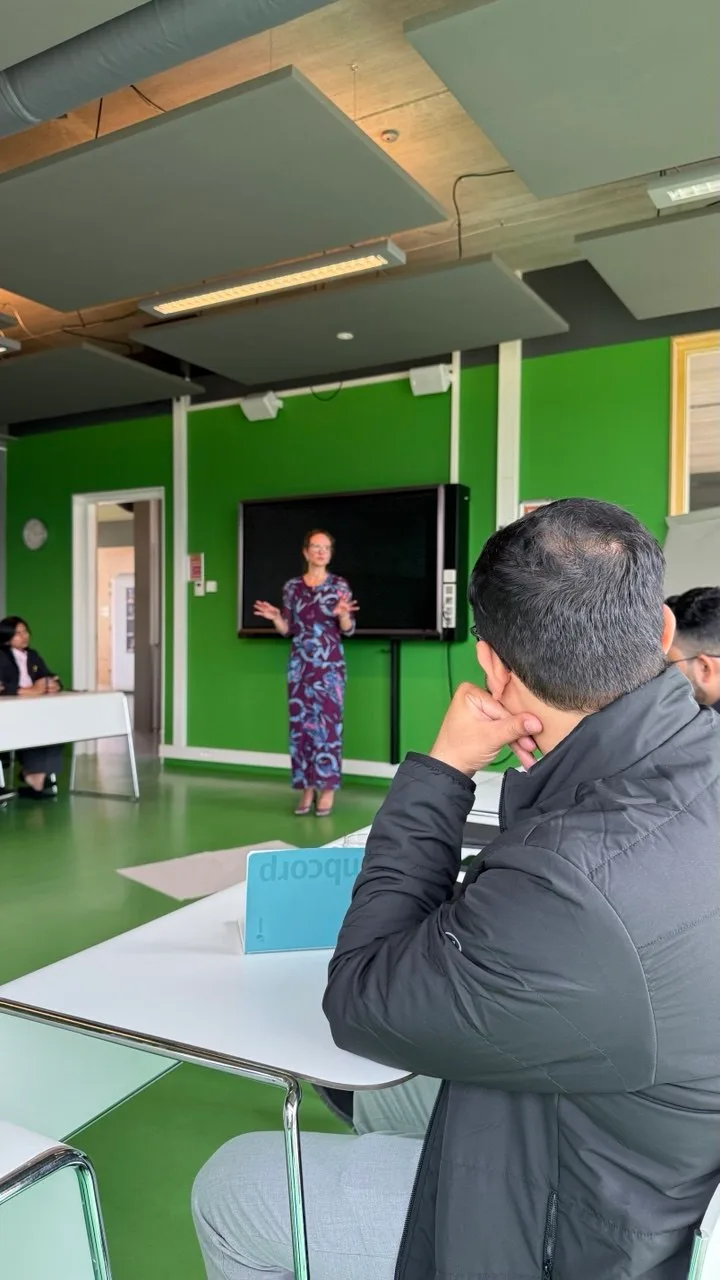
Nienke Homan, former regional Minister for the Province of Groningen, gave the introduction. She did not open with hydrogen. She opened with an earthquake.
 View full-size image
Decades of over-extraction from the Groningen natural gas field had destabilised the ground and caused a damaging tremor in 2011. Everything after that forced a rethink of how the north of the Netherlands handles energy. The answer was not a single technology. It was a discipline: thorough, strict, phased planning that co-locates production, storage, transport and use of hydrogen and its derivatives, all of it drawn from renewable power - solar and wind.
The lecture gave me a cleaner way to define the thing. My own short version: a Hydrogen Valley is the co-location of the entire hydrogen value chain - production, storage, utilisation and disposal - so the green molecule is handled from birth to death, at pilot scale.
At the end I asked Nienke the question I always ask: what were the mistakes, what are the lessons from the first valleys? Her answer was disarmingly honest, and it set the tone for my whole trip:
As everybody does, nobody talks about the demand. Nobody talks about the offtake.
Hold that thought. It comes back twice more this week.
Making the molecule real
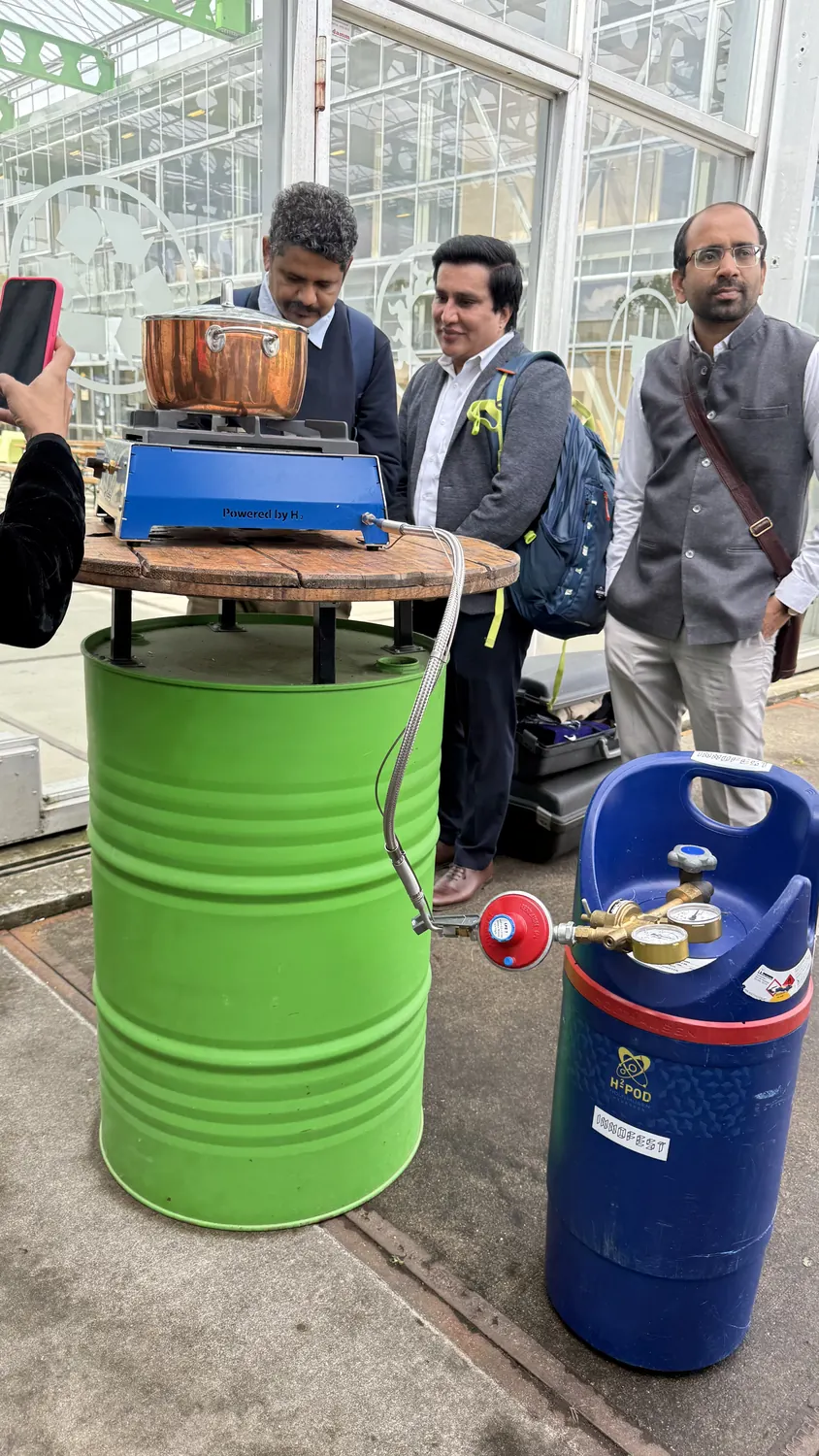
Then they showed us the end use, which is the part most conferences forget. A HyCooker - a hydrogen-powered cooking stove.
 View full-size image
What stuck with me was the pressure gap. The hydrogen disperses through the stovetop at the scale of millibars, while the storage cylinder feeding it sits at around 100 bar. That entire span - from a high-pressure vessel down to a gentle flame you could cook on - is the safety and engineering problem in miniature.
Then we toured the test beds for PEM and Alkaline electrolysers and the storage infrastructure around them.
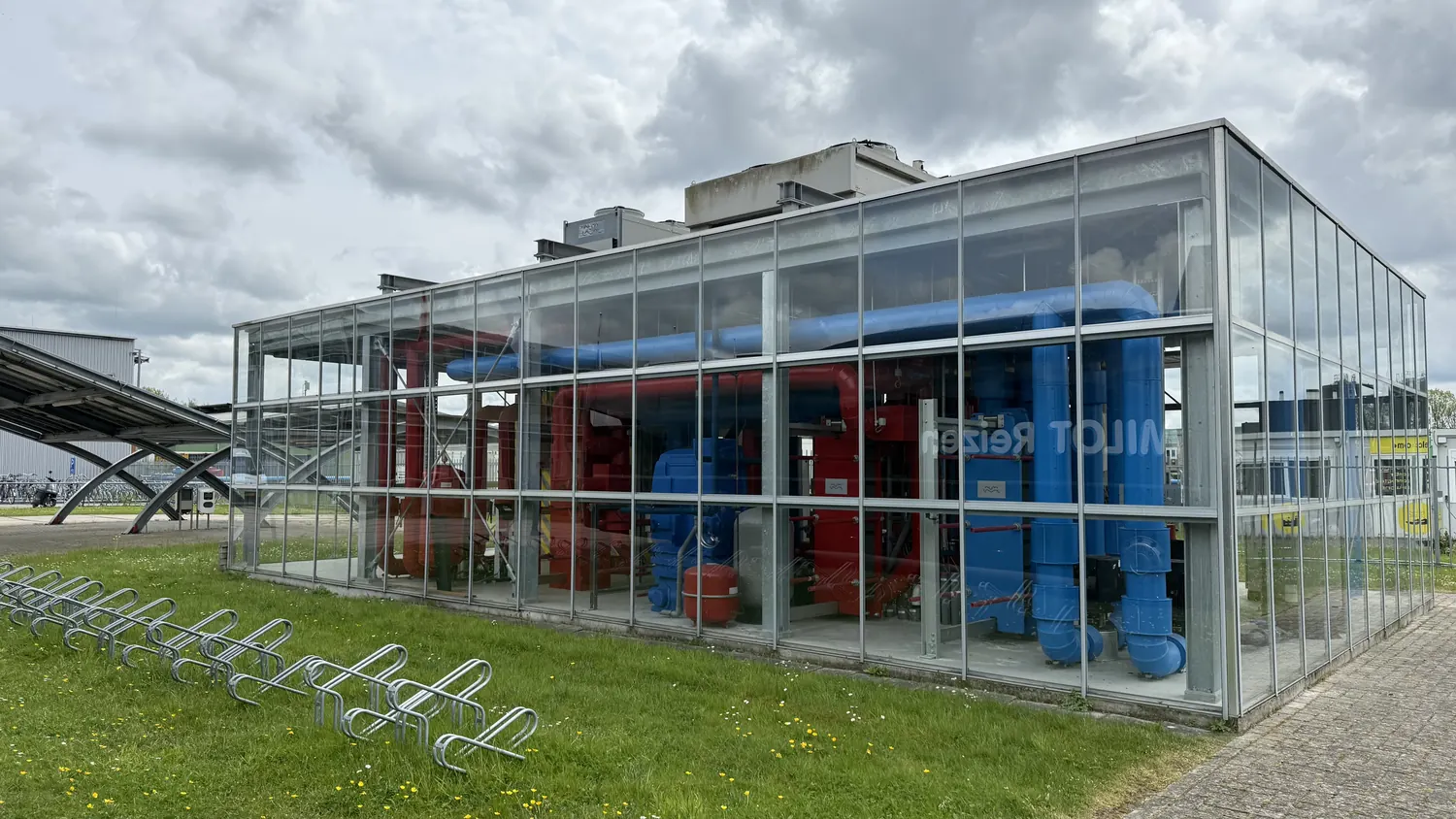 View full-size image
The most useful conversations of the morning were with the technicians and researchers, not the slides. They talked about the daily reality of working with green hydrogen: the handling, the redundancy, the things that look trivial in a brochure and become serious on a real site. It was a good reminder that this molecule is unforgiving of hand-waving.
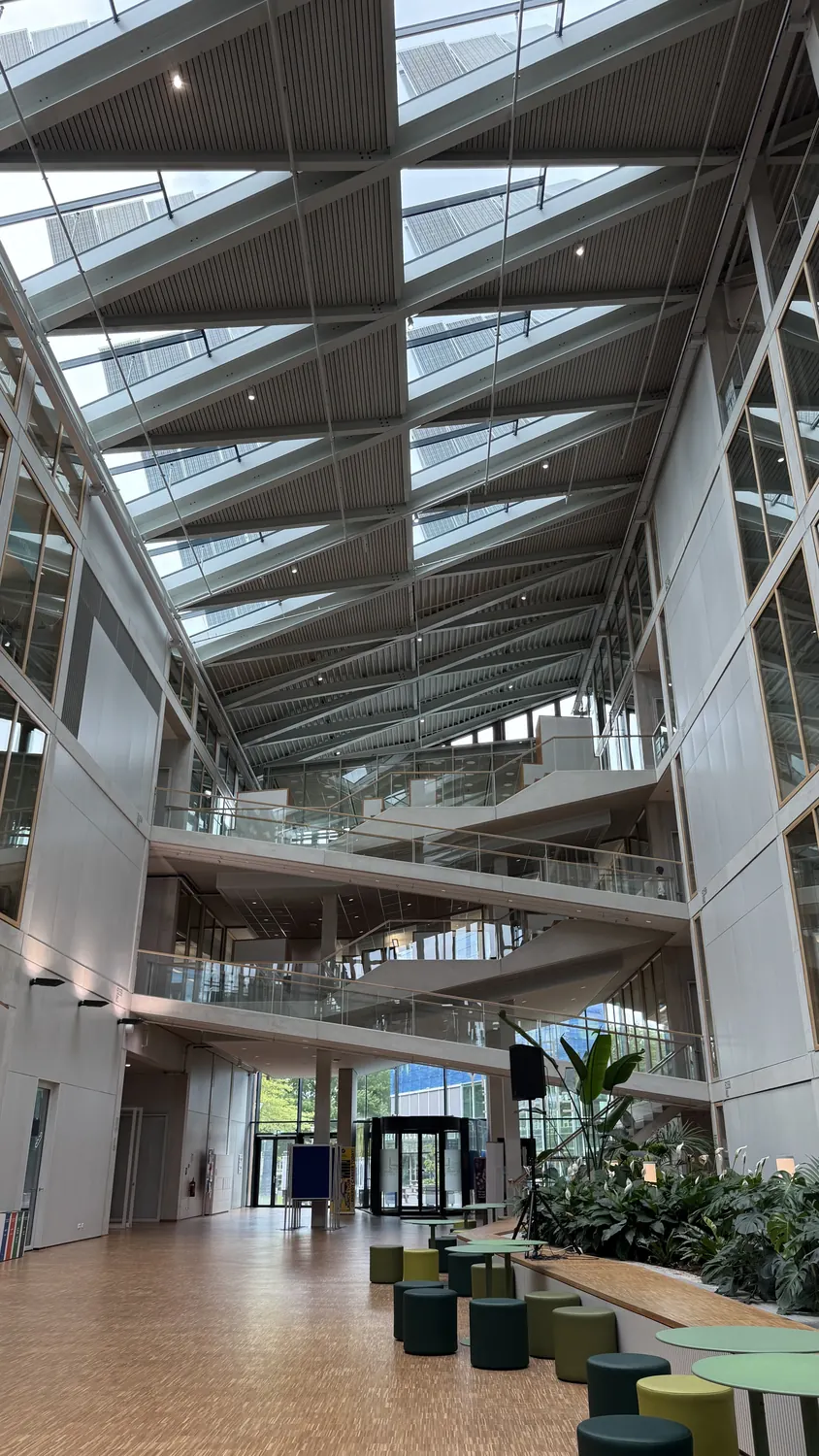
We ate lunch beside one of the most energy-efficient buildings on campus - fitting, given the morning's theme of designing the whole system rather than one piece of it.
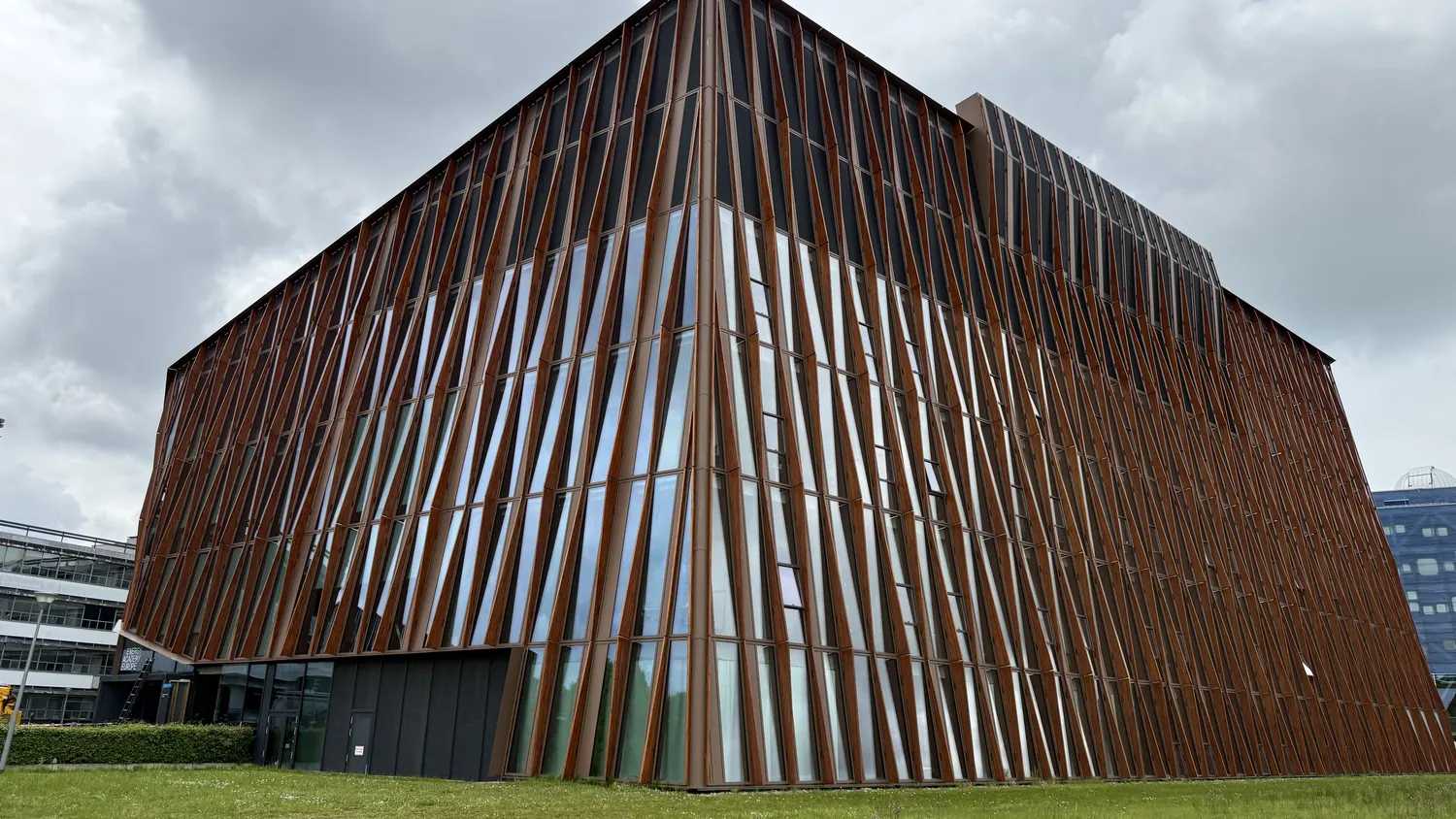
The world's first hydrogen bus, and a pricing lesson
After lunch we drove to Qbuzz BV, home to the world's first hydrogen bus deployment.
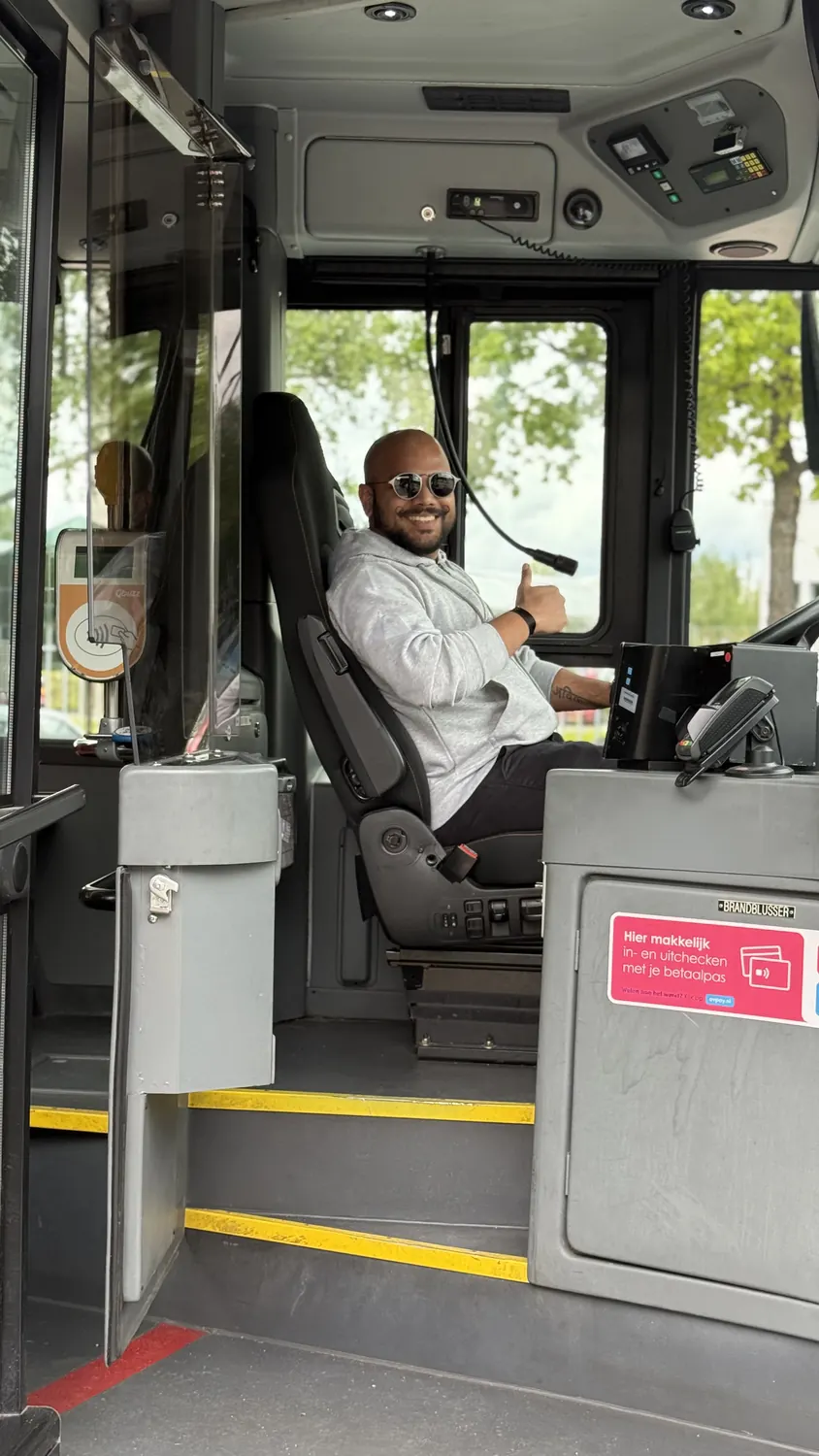
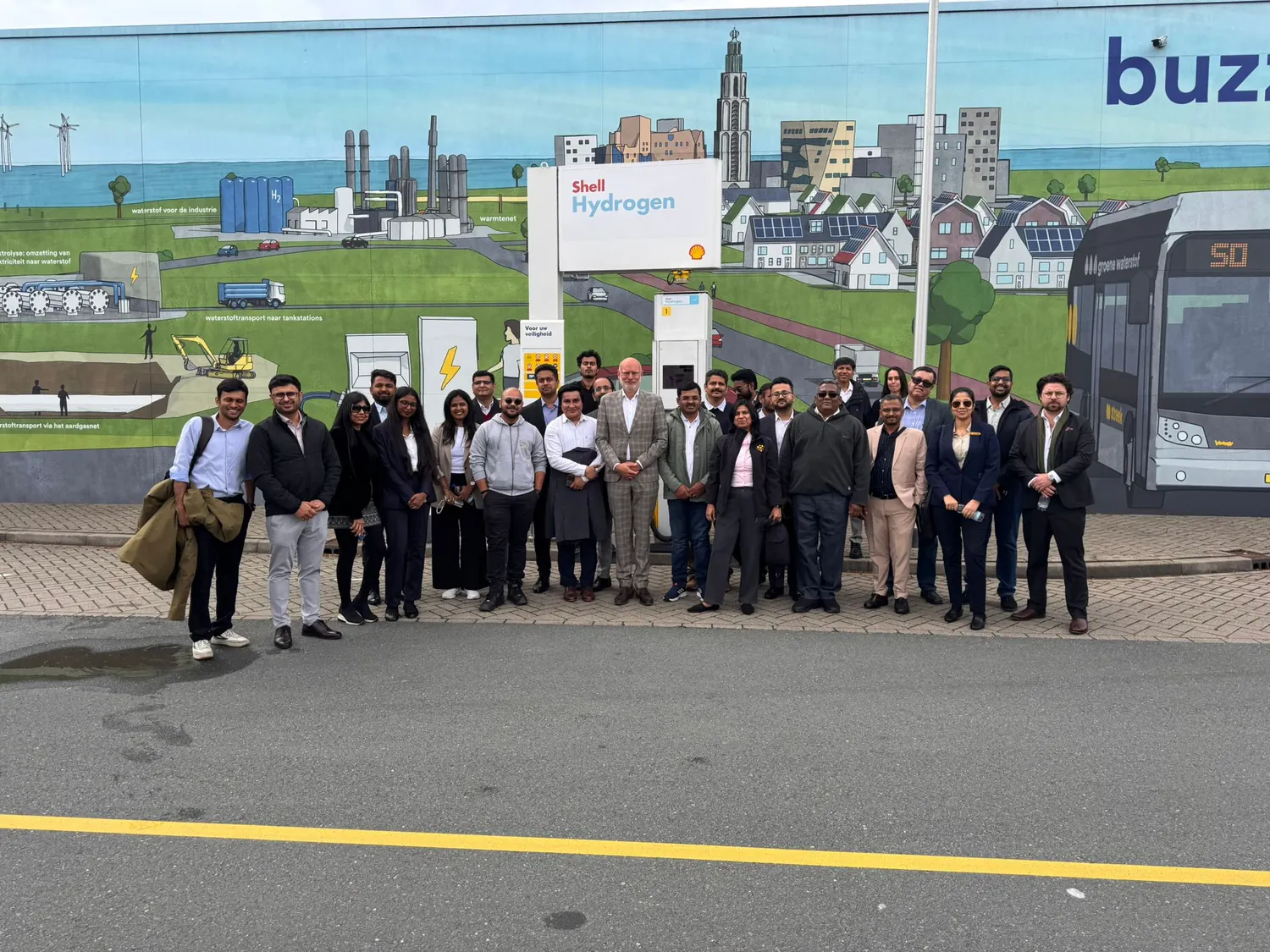
Here the lesson was operational. Running multi-fuel buses is hard. Operators need redundancy, drivers need training, and the whole system demands durability and real operational expertise that you only earn by running the route every day.
But the part that made me sit up was commercial. In a market with no clear, settled pricing for hydrogen, the bus operators leaned on long-term fixed-price contracts. Not as a financing nicety - as a precondition. Fixed pricing is often what makes the operator's job possible at all. That is Nienke's offtake point again, in a different form: the technology was ready before the demand had a stable price to stand on.
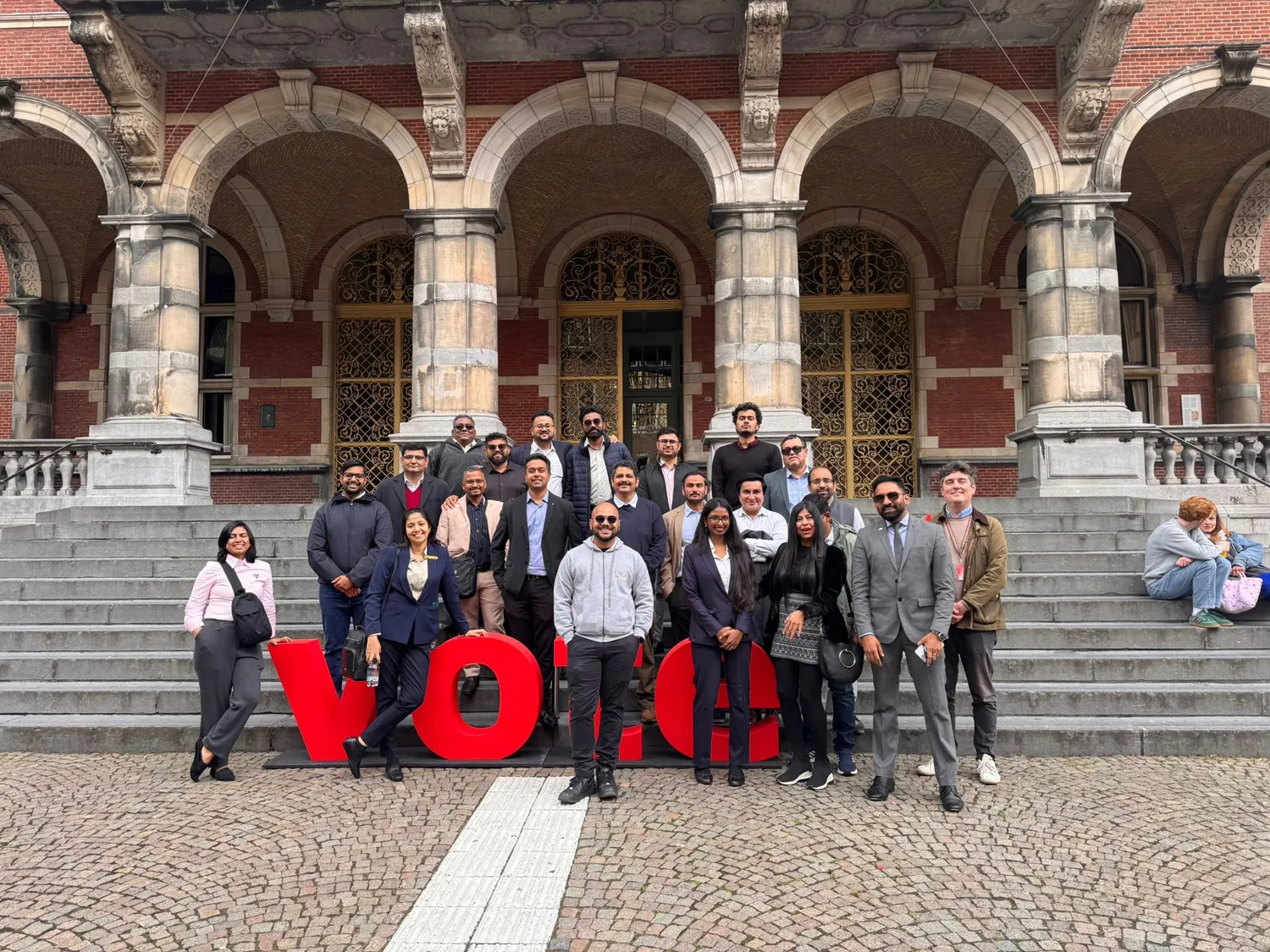
We closed the day with a guided tour of the university's old-town campus, established in 1614. Four hundred years of tradition is a humbling backdrop for an industry still arguing about its first decade.
 View full-size image
Then we reboarded for the long ride back to Rotterdam.
19-21 May - Ahoy Rotterdam, and the word "bankable"
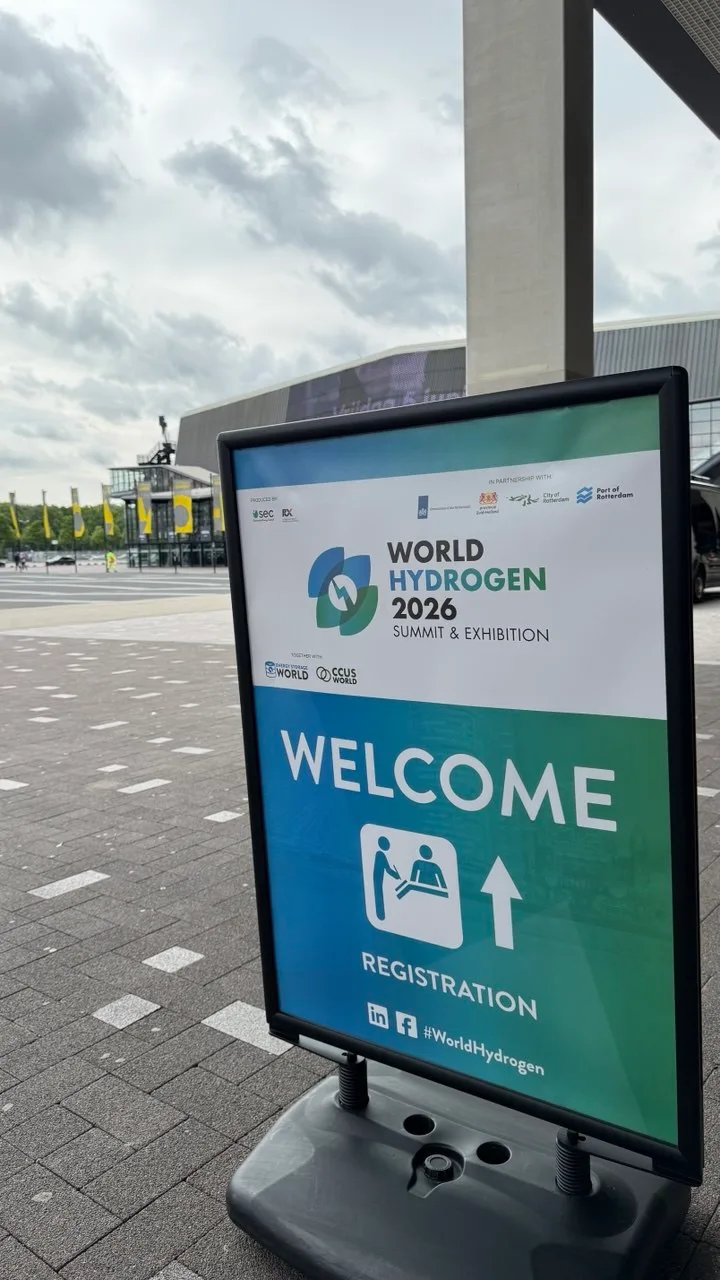
The summit itself ran out of Ahoy Rotterdam. I spent three days on the floor, in sessions and in the kind of corridor conversations that are the real reason you fly anywhere.
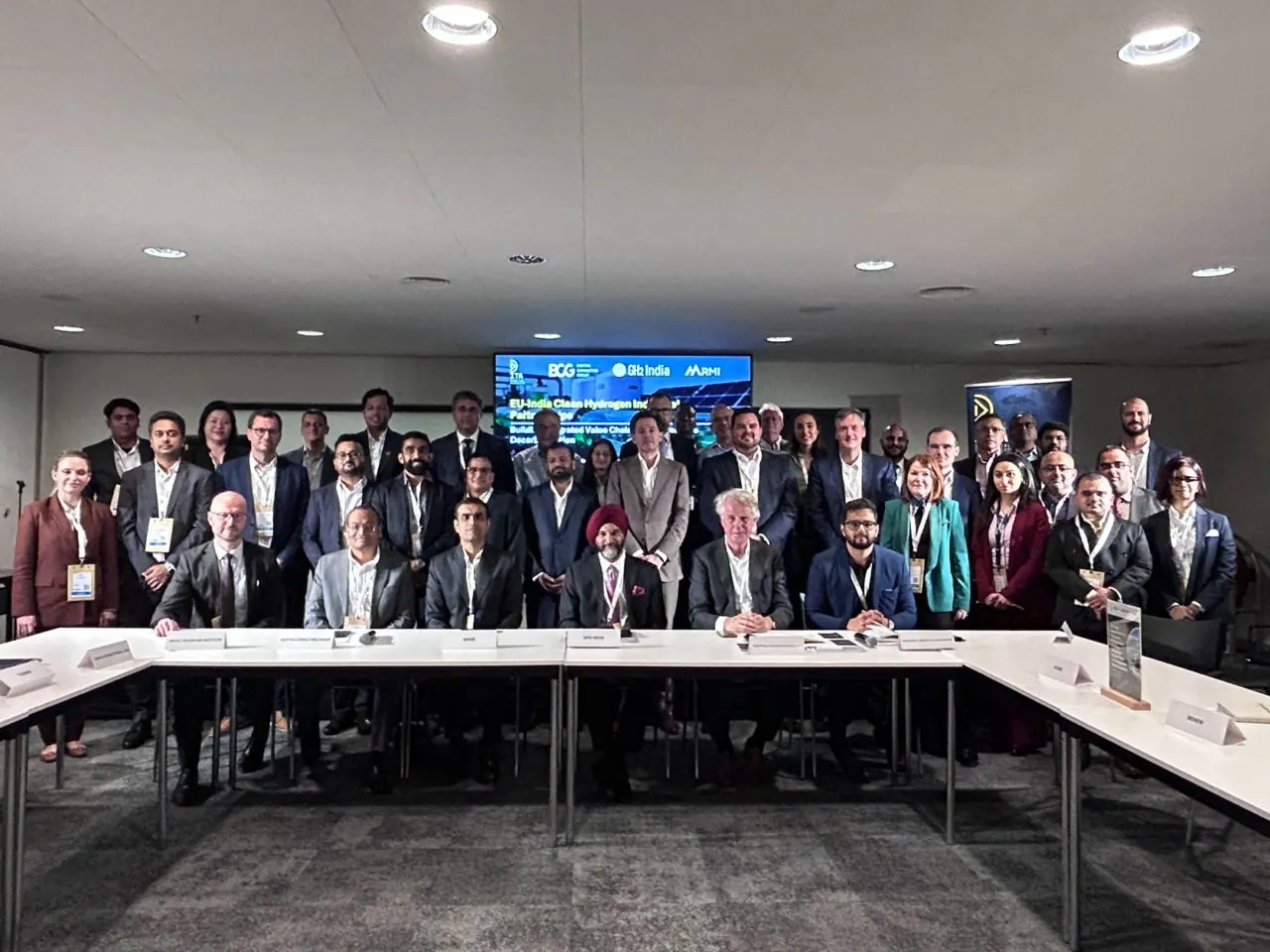
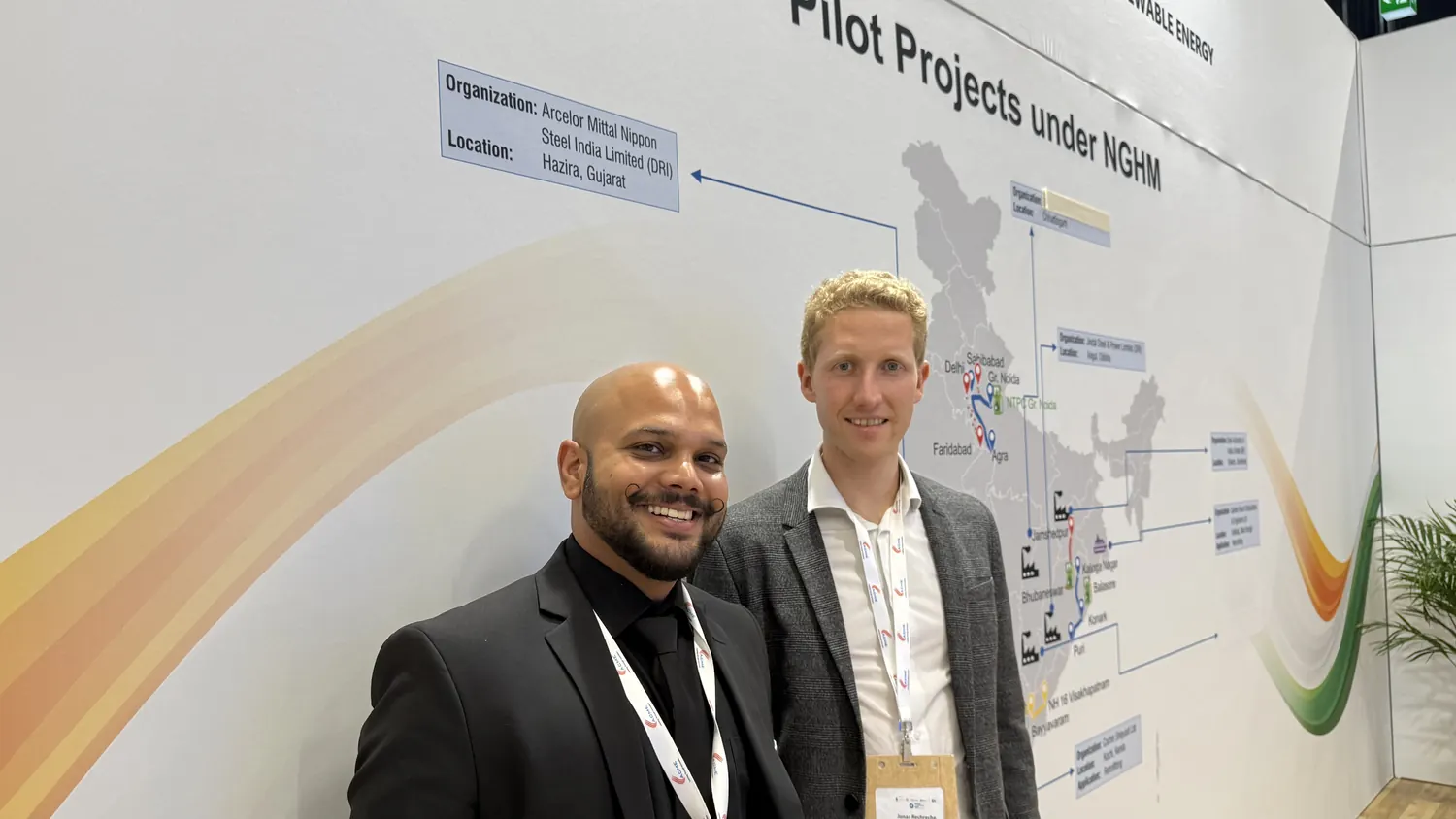
The session I keep returning to was a high-level roundtable on RFNBO certification, built squarely around India. I have written elsewhere about the EU's own bankability crisis, so I will not go over the rules again here. What struck me in the room was the tone. Nobody serious was asking for weaker standards. They were asking for durable, bankable clarity - a different request.
Almost every voice repeated the same bottleneck: geographic correlation. RFNBO rules centre on bidding zones: they expect the renewable source and the electrolyser to sit in the same zone. India does not behave like that. It runs much closer to one integrated national grid with near-uniform prices. So the room circled two candidate fixes: recognise India as a single bidding zone based on a Ministry of Power notification, or fall back to an "interconnected zones" interpretation. Developers, certifiers and the ministry were all at the same table - ACME, AM Green, ReNew on one side of the conversation; CertifHy, ISCC and REDcert on the other; MNRE in the middle.
Underneath all of it was a single recurring word: bankable. A certificate, the room kept concluding, is not paperwork tacked on at the end. It is a financial-risk instrument. If a supplier cannot prove compliance before the investment decision, the lender will not lend and the offtaker will not sign. Certainty has to arrive before FID, not after commercial lock-in.
The cleanest line of the session came at the end, from Dr. Prasad of MNRE. Strip away the legal fencing, he said, and what everyone actually wants is a simple conditional rule: if these conditions are met, the project is compliant; if not, it is not. So that Europe, India, developers, users and investors can all act with clarity.
That sums up the whole session in one line. Notice what it is about - giving demand the confidence to commit.
 View full-size image
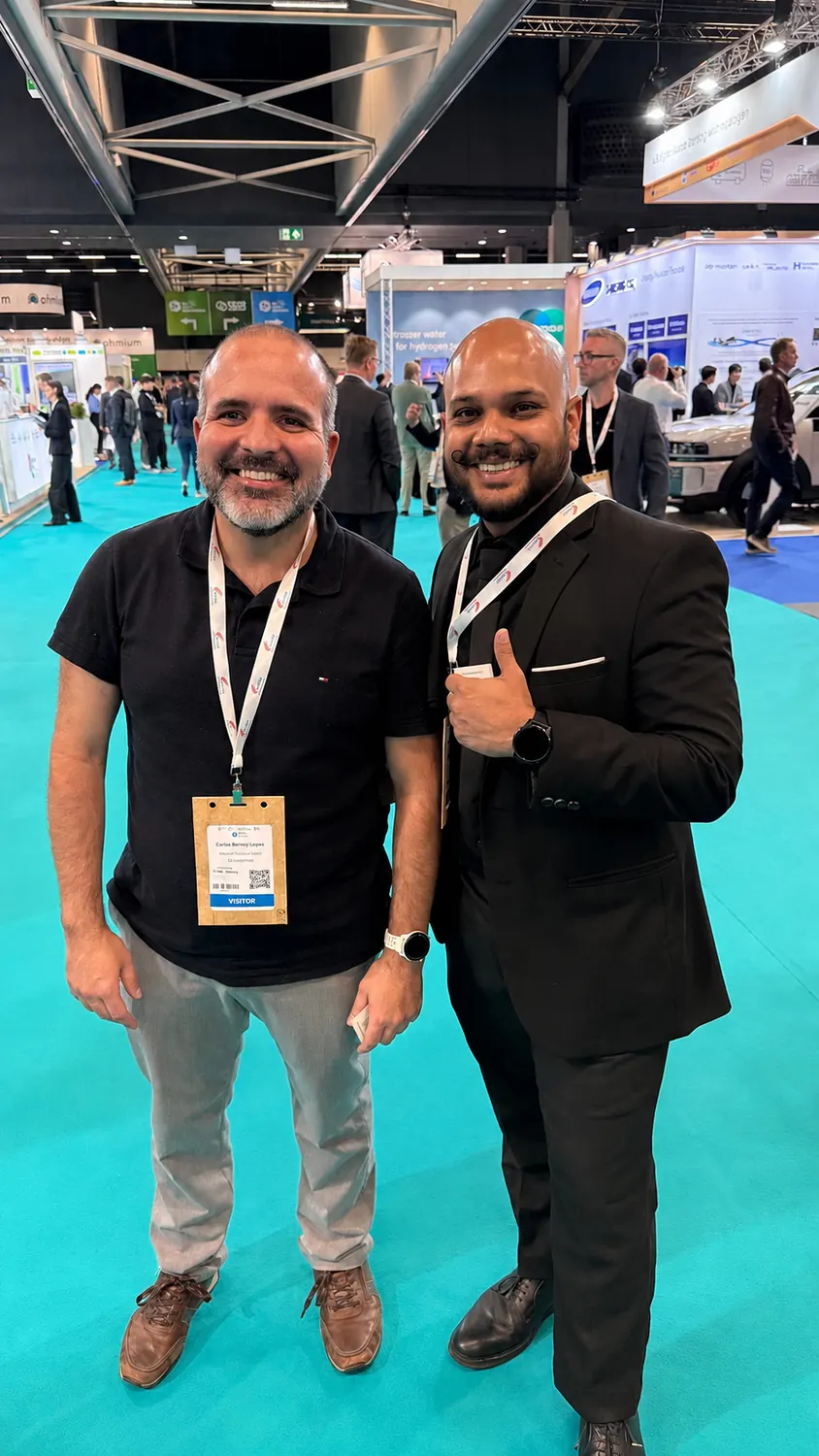
The networking days were their own education. India had a real presence on the floor, and a surprising amount of the useful learning happened standing up, coffee in hand, comparing notes with people building the same future from different corners of it.
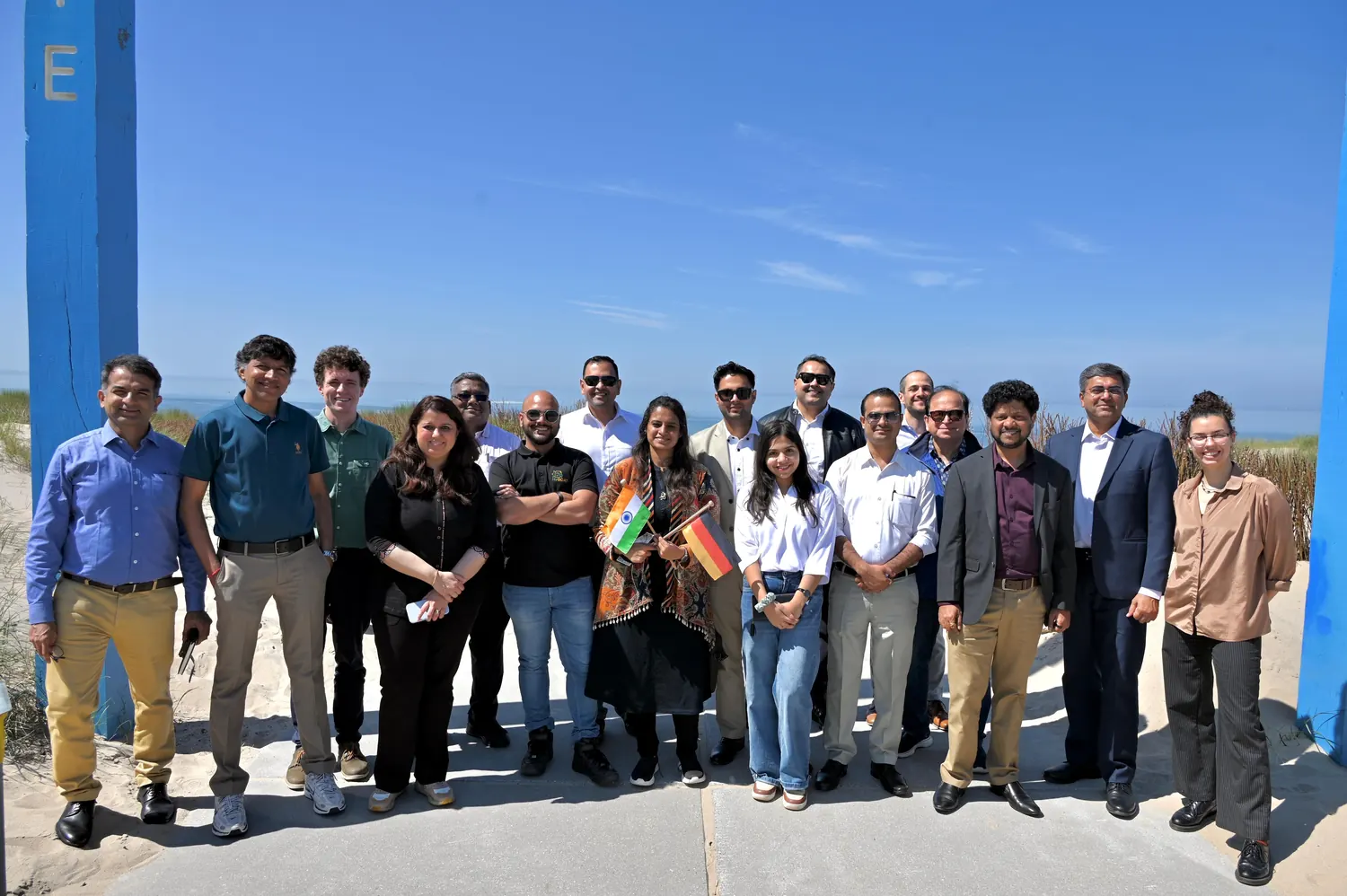
Friday, 22 May - the Port of Rotterdam, where the corridor is real
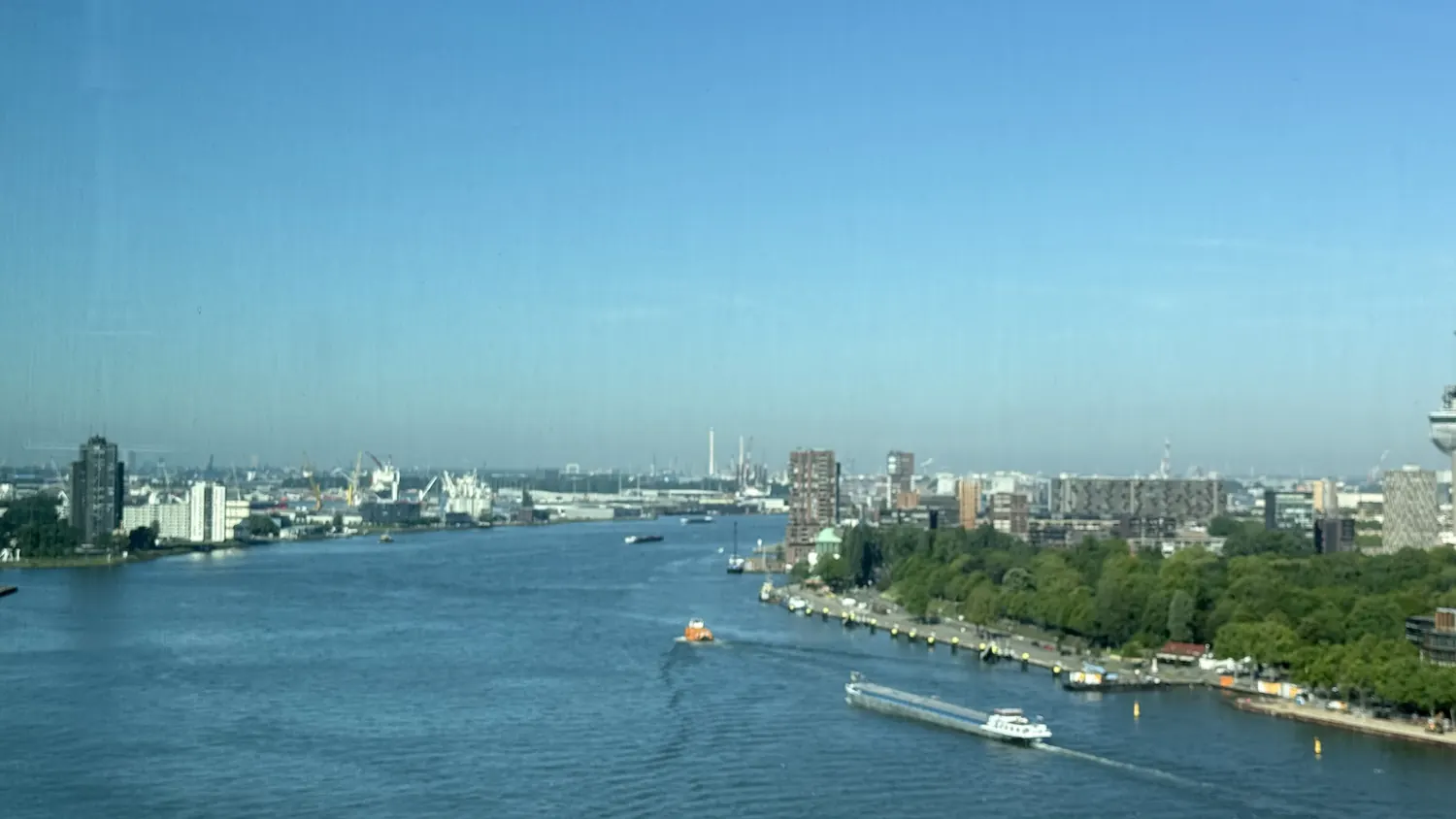
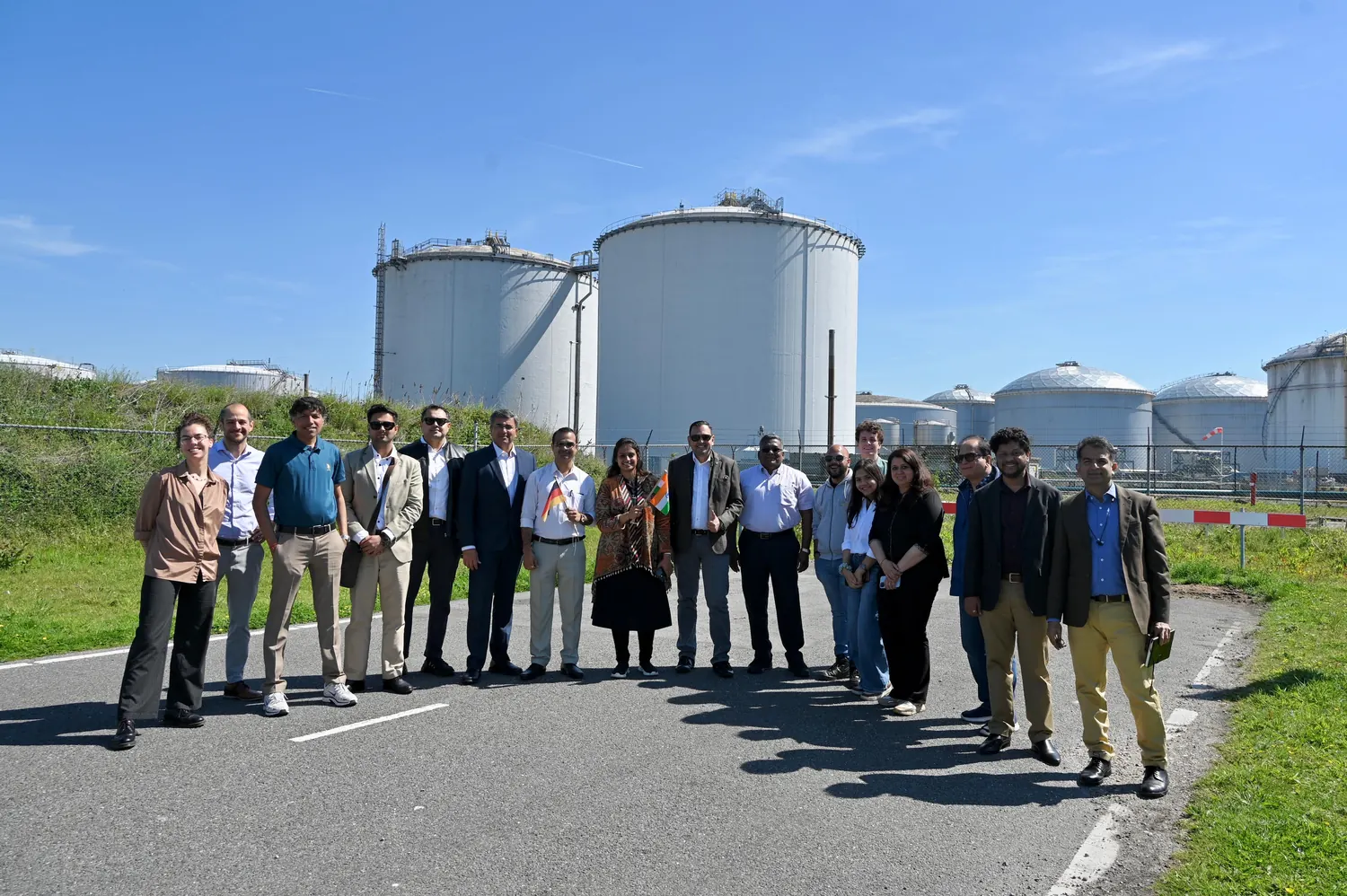
If Groningen was the value chain in miniature, Rotterdam was the value chain at industrial scale. We visited the port, and it reframed how I think about the whole problem.
 View full-size image
Europe is not building a hydrogen market around a single plant or a single terminal. It is building a corridor: offshore wind landing and conversion parks, large electrolysers, open-access hydrogen pipelines, ammonia import terminals, cracking facilities, liquid-organic carriers, refinery offtake, and eventually shipping fuel. A whole system, designed to move molecules from where they are cheap to where they are needed.
The number that lodged in my head was about demand, again. Shell's Pernis refinery, one of Europe's largest at roughly 400,000 barrels a day, is an enormous hydrogen consumer. The flagship green plant linked to it, Holland Hydrogen I, is around 200 MW - perhaps 50 to 60 tonnes of hydrogen a day. By the tour's own framing, that covers only about 10% of Pernis's hydrogen appetite.
Sit with that. Even here, in the most developed hydrogen corridor in the world, clean supply is a small fraction of the demand sitting right next to it. When green molecules only displace part of grey demand, the proof burden gets sharper, not softer - because now it matters which molecules are the green ones, and what claim you can make about them.
 View full-size image
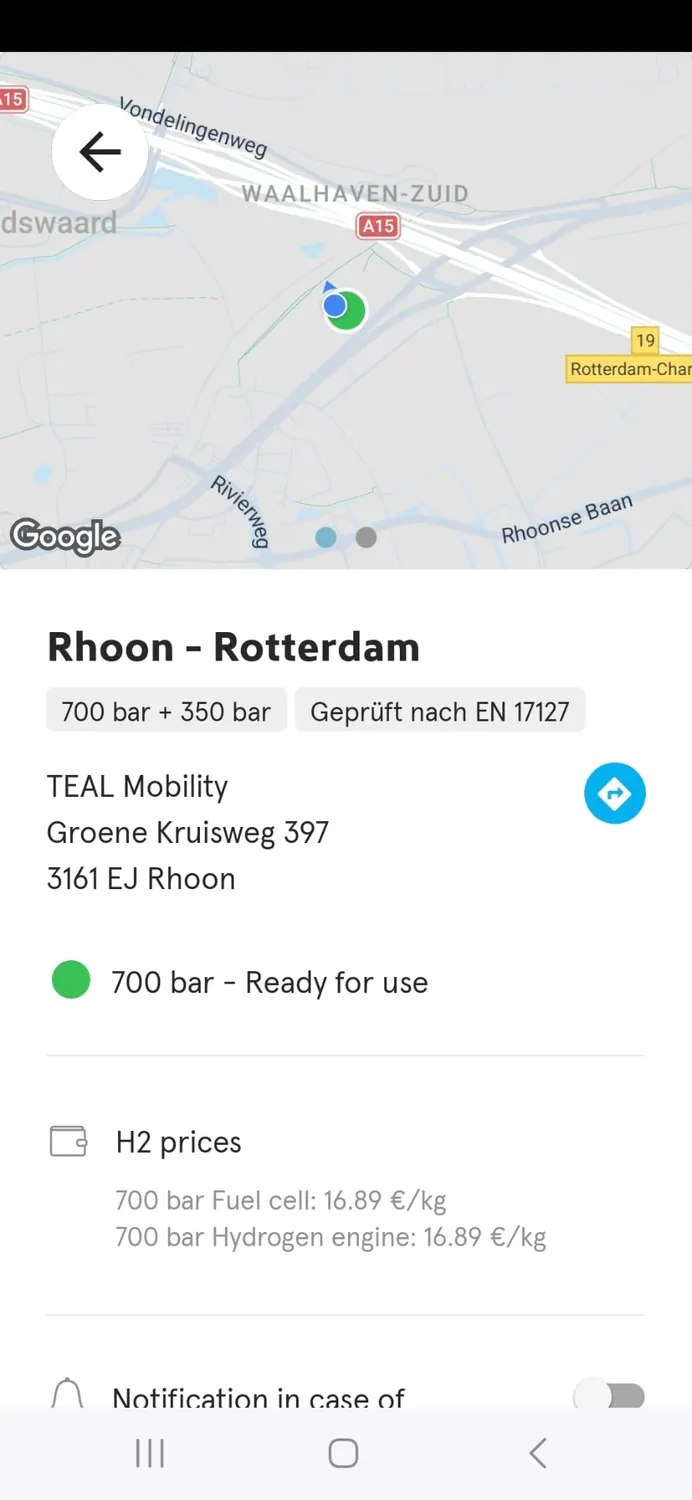
The ammonia infrastructure made that concrete. Refrigerated tanks on the order of 30,000 tonnes each, held at around minus 33 Celsius, wrapped in serious containment. This is not a thought experiment about hydrogen carriers. It is operational steel in the ground. Projects like VTTI's Amplifhy and the ACE Terminal are going up as open-access gateways to import ammonia and crack it back into hydrogen for northwest Europe. The molecule changes form several times between a wind turbine off the Dutch coast and a burner in a German factory - and every one of those conversions is a point where its green identity has to survive.
 View full-size image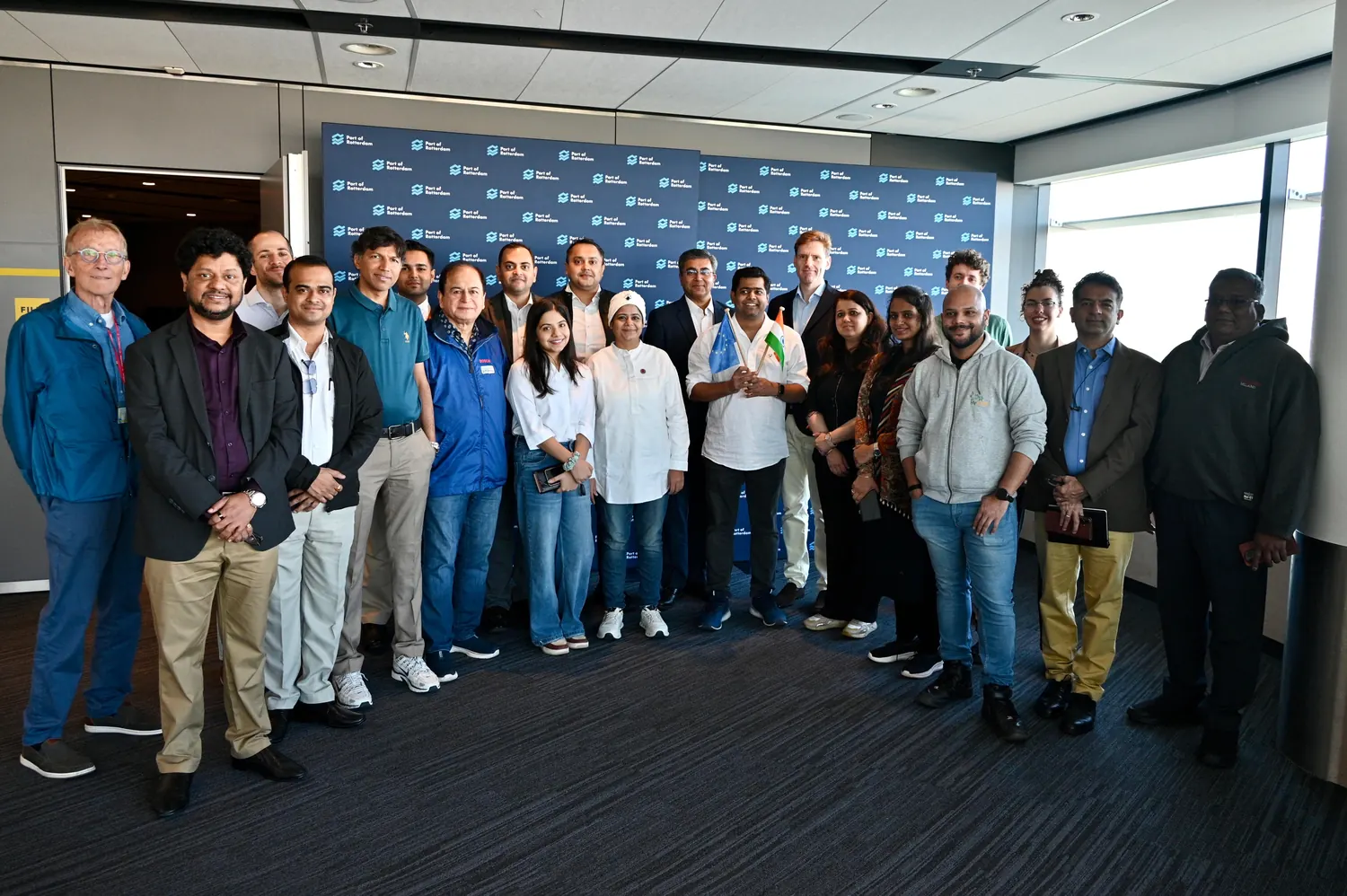
What the week added up to
Three places, one thread.
In Groningen, the minister who helped build the first Hydrogen Valley told me the field still does not talk honestly about demand. The bus operators at Qbuzz could only function on fixed-price, long-term offtake. At the summit, an entire roundtable of developers and certifiers reduced India's export future to a single requirement: durable, bankable certainty that arrives before the investment decision. And at the Port of Rotterdam, the most advanced corridor on earth, clean supply still covers a sliver of the demand standing next to it.
The production problem is, broadly, being solved. Electrolysers work. Valleys can be designed. Ports can be rebuilt. The unsolved problems are the two that nobody puts on the main stage: securing the demand, and keeping the proof of a molecule's greenness intact and portable as it moves through storage, conversion, transport and a dozen counterparties.
That second problem is the one I have chosen to spend my days on. Watching ammonia change state in a Rotterdam tank, or a Rajasthan electron try to qualify against an EU bidding-zone rule, the same need keeps surfacing - proof that travels with the molecule and survives every handoff. That is the world we are building HyGOAT for. This week just made it physical.
If your week looked anything like mine, I would like to compare notes.
Ekansh Sharma